


High Bay Pallet Racking Safety Guide: 4 Key Factors for Safer Warehouse Operations
As warehouse space becomes more valuable, many businesses are increasing storage capacity by building higher. Today, reaching 8, 10, or even 12 meters are commonly found in manufacturing facilities, distribution centers, and third-party logistics warehouses.
While high bay pallet racking helps maximize storage density, it also places greater demands on forklift performance, rack design, and day-to-day warehouse management.
In high-level storage environments, a misplaced pallet or a minor forklift impact can result in damaged goods, rack deformation, or even safety incidents. More importantly, some structural damage may not be immediately visible but can lead to costly repairs, operational disruptions, and inventory losses over time.
Based on our experience in pallet racking projects, the safe operation of high bay racking systems depends on four key areas: forklift selection, clearance management, load placement, and routine inspections.

1. Choose the Right Forklift for High-Level Storage
Not every forklift is suitable for high bay racking operations.
One factor that is often overlooked is that a forklift's actual load capacity decreases as lift height increases. A forklift rated for 2,000 kg at ground level may have a significantly lower capacity when operating at heights of 8 or 9 meters.
For this reason, rack planning should always consider pallet weight, load dimensions, and maximum storage height together.
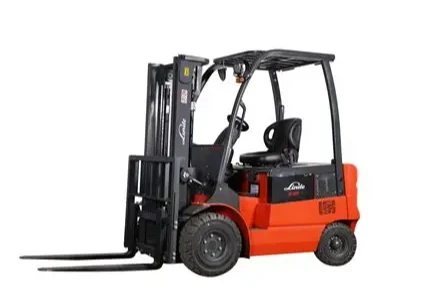
For standard warehouse layouts, counterbalance forklifts may be sufficient. However, warehouses with higher storage elevations or space constraints often benefit from reach trucks or turret trucks, which offer improved maneuverability and storage efficiency.
A common mistake is operating equipment close to its maximum lifting limits for extended periods. As lift height increases, forklift stability during turning, braking, and pallet positioning becomes more critical.
Maintaining a reasonable performance margin is, in practice, maintaining a safety margin.
In addition, attachments such as side shifters, pallet positioners, load backrests, and fork extensions can improve handling accuracy and reduce the risk of pallet placement errors during high-level operations.

2. Clearance Management: A Critical Part of Rack Safety
When designing a pallet racking system, clearance should never be viewed as wasted space.
Adequate clearances provide the operating space needed for safe forklift movement and accurate pallet placement.
As a general reference, many warehouse designs allow approximately 150 mm (6 inches) of lateral clearance, while sufficient vertical clearance should also be maintained based on pallet dimensions, product characteristics, and forklift specifications. Actual clearance requirements should always be determined according to operational conditions and applicable standards.
In many warehouses, rack damage is not caused by overloading but by repeated forklift contact with uprights and beams due to insufficient operating space.
Visual management also plays an important role. Clear location labels, aisle identification, beam markings, and pallet guides help operators position loads more accurately, improving both safety and productivity.

3. Proper Load Placement Improves Overall Stability
The way products are stored on pallets directly affects the safety of the entire racking system.
Heavier loads should generally be stored on lower beam levels whenever possible. This helps lower the overall center of gravity and improves system stability.
Loads should remain centered on the pallet and evenly distributed. Damaged pallets, uneven loading, overhanging products, and off-center weight distribution can increase the risk of load shifting or falling, particularly at higher storage levels.
These risks become even more significant in warehouses with frequent inbound and outbound operations, such as e-commerce fulfillment centers and logistics facilities.
To further improve safety, many warehouses install additional accessories such as pallet stops, pallet safety supports, and wire mesh decking.
Wire mesh decking is widely used because it provides reliable load support while maintaining visibility throughout the rack structure. It is particularly useful for supporting irregularly shaped products and can help improve sprinkler water penetration in fire protection systems.
For warehouse projects designed in accordance with standards such as AS4084, RMI, or CE requirements, these safety accessories are often considered an important part of a complete racking solution.
4. Establish a Routine Inspection Program
Even a well-designed racking system requires regular inspection and maintenance.
Without routine checks, small issues can develop into larger safety concerns over time.
✓
✓
✓
✓
✓ Check for off-center, oversized, or unstable loads
✓
✓
✓
✓
Any identified issues should be addressed promptly to prevent minor damage from becoming a larger operational or safety problem.
High bay pallet racking allows businesses to make better use of available warehouse space, but increased storage height also requires greater attention to equipment, design, and operational practices.
Forklift selection, clearance management, load placement, and routine inspections all contribute to the overall safety and efficiency of a warehouse.
If you are planning a new pallet racking system or looking to improve an existing warehouse operation, evaluating these four areas is often the best place to start.
With extensive experience in high-bay storage projects, Jracking provides customized pallet racking systems and warehouse safety solutions designed to meet operational requirements while complying with standards such as RMI, AS4084, and CE.


